In the ever-evolving landscape of global defence, the rise of hypersonic technology has fundamentally altered the nature of modern warfare. Hypersonic missiles, capable of exceeding speeds of Mach 5, pose a daunting challenge to conventional defence systems, often rendering them ineffective against such swift and unpredictable threats. Amid this technological arms race, Africa has made an audacious entrance onto the world stage with KAMBISA™, the continent’s first hypersonic missile defence platform.
Crafted through a pioneering collaboration between South Africa’s IBUTHO Defence Technologies and HYPERIAN AEROSPACE, KAMBISA™ stands as a testament to innovation, ambition, and a vision for a secure and self-reliant Africa. This article explores the depths of KAMBISA™, delving into its technological sophistication, economic promise, and the strategic foresight driving its creation, while drawing on insights from Robert Statica, co-founder of the Ibutho-Hyperian joint venture, shared during an exclusive interview with CNBC Africa. At its core, KAMBISA™ is a national hypersonic missile defence platform engineered to neutralise long-range, high-speed aerial threats with extraordinary precision.
This is no small feat in an era where speed and stealth define the battlefield. The system brings together an impressive array of advanced technologies, each component working in harmony to create a defence shield unlike any other in Africa. The HM1-HM3 hypersonic interceptors, capable of reaching speeds between Mach 15 and Mach 25, form the backbone of this platform. These interceptors are designed to meet and destroy incoming hypersonic threats head-on, matching their velocity and outpacing their ability to evade. Complementing this kinetic power are directed energy weapons, or DEWs, which harness focused energy—think lasers or microwaves—to disable or demolish aerial dangers in an instant.
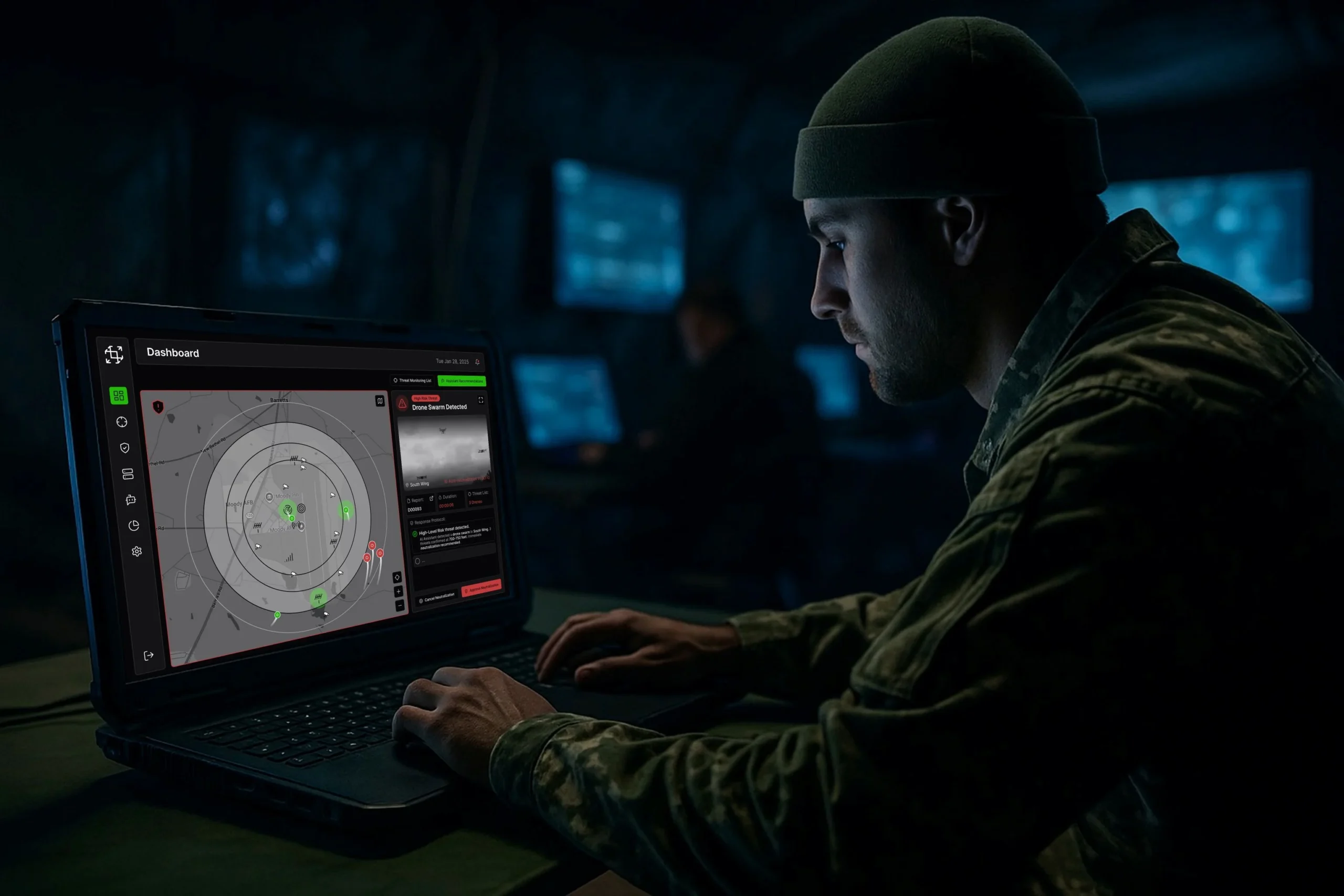
This blend of speed and energy-based solutions offers a versatile and rapid response to a wide range of threats. The platform’s intelligence comes from its AI-guided multi-spectrum radar arrays, which provide real-time detection and tracking capabilities across various wavelengths. Powered by artificial intelligence, these radar systems can sift through complex data, pinpoint threats, and prioritise responses with a speed and accuracy that human operators alone could not achieve. This technological edge ensures KAMBISA™ remains vigilant and responsive, even under the most demanding conditions.
Adding to its flexibility are mobile and stationary launch systems, allowing the platform to be deployed wherever it’s needed most—be it protecting highly strategic installations, national capitals, or defence command centres. The ability to reposition quickly or maintain a fixed presence makes KAMBISA™ adaptable to diverse operational needs. Perhaps most striking is the platform’s full command autonomy, a feature that grants operators sovereign control over the entire defence network.
This means KAMBISA™ isn’t tethered to foreign oversight or external dependencies; it’s a system built for self-reliance, tailored to the specific security priorities of its users. Its modular and scalable design further enhances its appeal, enabling it to integrate seamlessly into existing defence frameworks or scale up as needs evolve. This adaptability, paired with its export-ready status under secure strategic partnership agreements, positions KAMBISA™ as a solution not just for South Africa, but for nations worldwide seeking to bolster their aerial defences.
The story of KAMBISA™ extends beyond its technical marvels to the vision that birthed it. Robert Statica, in his CNBC Africa interview, painted a picture of a project that transcends mere defence. “KAMBISA™ is not just about countering hypersonic threats,” he explained. “It’s about placing Africa at the forefront of next-generation defence technology. We’re creating a system that safeguards our nations while offering it to partners who value sovereignty and security as much as we do.” This ambition reflects a broader goal: to elevate Africa’s standing in the global defence arena, shifting it from a consumer of imported technology to a producer of cutting-edge solutions.
The economic implications of this vision are profound. Statica estimates that KAMBISA™ could generate between 20,000 and 100,000 jobs across South Africa and the wider continent within the next one to five years. These aren’t low-skill positions either—think engineers designing propulsion systems, programmers coding AI algorithms, and avionics experts refining radar technology, alongside a host of supporting roles that will ripple through the economy. To fuel this workforce, IBUTHO is partnering with local universities and industry players, offering engineering students, programmers, and electrical engineers hands-on experience through internships that transition into permanent roles post-graduation.
This isn’t a short-term boost; it’s a deliberate effort to cultivate a generation of skilled professionals who can lead South Africa into a future defined by technological and industrial strength. The potential for economic growth here is immense, as these efforts could establish South Africa as a hub for advanced manufacturing and innovation in Africa. Funding a project of this magnitude requires creativity, and IBUTHO is rising to the challenge with a forward-thinking approach.
For the first time in the defence sector, the company is pursuing a private-public partnership model, marrying government support with private industry investment. This hybrid strategy balances the financial demands of cutting-edge defence development with the need to keep the project aligned with national priorities. Statica acknowledged the steep costs of aircraft and missile production but pointed to innovative cost-saving measures. “We’re using digital engineering—designing everything on computers, from airflow modelling to structural testing—and 3D printing, which cuts down on the need for sprawling factories,” he said.
These methods streamline production, reduce waste, and accelerate timelines, making KAMBISA™ both financially viable and agile in a fast-moving industry. The enthusiasm from prospective partners eager to invest suggests this approach is working, laying a robust financial groundwork for the project’s future. IBUTHO’s gaze extends far beyond South Africa’s borders. The company has set its sights on exporting KAMBISA™ to BRICS nations—Brazil, Russia, India, China, and South Africa—as well as the African Union and Latin America. Following a recent soft launch, Statica reported an overwhelming response, with countries reaching out incessantly to join the initiative.
The allure is clear: KAMBISA™ offers top-tier, globally unmatched defence capabilities, driven by AI solutions that balance automation with human oversight. For nations long reliant on foreign defence technology, an African-built platform that prioritises sovereignty is a breath of fresh air. South Africa’s strategic location, skilled workforce, and the potent collaboration between IBUTHO and HYPERIAN AEROSPACE make it an ideal launchpad for this export drive. By producing rather than purchasing, South Africa enhances its own security while setting a precedent for continental self-sufficiency.
On the security front, KAMBISA™ is just one part of IBUTHO’s sweeping plan to modernise South Africa’s defence framework across air, sea, land, space, and borders. Statica envisions a continent-wide defence network where AI links systems together, enabling nations to shield their territories, address regional conflicts, and curb issues like contraband and illegal border crossings.
“By identifying threats and coordinating responses, this infrastructure could bring stability to a region that’s long grappled with such challenges,” he noted. This isn’t a pipe dream—it’s a practical vision already gaining traction with AU and BRICS partners who view South Africa as a trailblazer in this domain. The use of AI to streamline decision-making, while keeping humans firmly in control, offers a level of efficiency and responsiveness that traditional systems can’t match. Cybersecurity forms another vital pillar of this strategy. IBUTHO is establishing a National Cyber Security Operations Centre to protect South Africa’s critical networks—power grids, water systems, air traffic control, and government and military operations.
Many of these systems are ageing and exposed to attacks, data breaches, and insider threats, making this initiative long overdue. The centre will act as a nerve hub, monitoring and defending against digital vulnerabilities, ensuring that South Africa’s defence infrastructure remains resilient in an increasingly connected world. This holistic approach, blending physical and cyber defences, reflects IBUTHO’s commitment to comprehensive national security.
In closing, KAMBISA™ is more than a technological triumph; it’s a symbol of Africa’s ascent in the global defence landscape. Through the ingenuity of IBUTHO and HYPERIAN AEROSPACE, South Africa is crafting a hypersonic missile defence platform that rivals the world’s best, while laying the groundwork for economic prosperity and continental stability.
As Statica put it, “We’re not just building a defence system; we’re building the future of Africa’s sovereignty and security.” With KAMBISA™, Africa steps out of the shadows, asserting its ability to protect its interests and offer groundbreaking solutions to the world. This marks the dawn of a new era for African defence—one where KAMBISA™ leads the way.