Electronic warfare is the set of military and security activities that control, exploit, or deny the electromagnetic spectrum to achieve tactical and operational advantage. It covers three main functions: attacking enemy sensors and links, protecting friendly systems from attack, and collecting electromagnetic intelligence for targeting and defense.
What is Electronic Warfare (EW)
Here are the core concepts you need to understand modern electronic warfare (EW). It covers the electromagnetic spectrum, jamming and spoofing techniques, the growing overlap between cyber operations and EW, how forces manage the spectrum, and practical measures to harden forces and platforms. Where useful, I cite recent industry activity and real-world examples so readers can see how doctrine, procurement, and battlefield practice are changing right now.
Why the electromagnetic spectrum matters to modern combat
Every sensor, datalink, satellite, radar, and radio-controlled weapon system depends on the electromagnetic spectrum. Control of that spectrum enables force-level effects that are non-lethal yet decisive: deny an adversary the ability to see or talk; degrade precision navigation and timing; blind air defenses; or corrupt command-and-control. In short, EW shapes the information battlespace and can change the outcome of engagements before kinetic force is applied. Recent doctrine and procurement show militaries are treating EW as a core warfighting capability rather than a niche specialty.
Key, digestible points for quick reference:
- EW is about effects on radio, radar, satellite, and navigation signals.
- It is an operational capability; planners integrate EW with fires, cyber, ISR, and maneuver.
- Loss of spectrum access affects weapons, logistics, and civilian infrastructure simultaneously.
The three canonical EW functions
Doctrine usually divides EW into three practical functions. These are easy to remember and useful for planning.
- Electronic Attack (EA) — Actions that employ electromagnetic or directed energy to degrade, deny, deceive, or destroy enemy capabilities. Jamming and spoofing fall here.
- Electronic Protection (EP) — Measures taken to protect friendly use of the spectrum. Examples include frequency hopping, hardened waveforms, and anti-jam GPS.
- Electronic Support (ES) — Passive sensing to discover, classify, and geolocate emitters for targeting, warning, and attribution.
These functions map to hardware families, software stacks, and trained roles across services; modern operations require them to be coordinated tightly with cyber and intelligence assets.

Jamming, spoofing and the mechanics of interruption
What is jamming?
Jamming is the deliberate transmission of radio-frequency energy to degrade or deny the reception of target signals. The basic idea is simple; the execution is not. Effective jamming requires knowledge of the target frequency, waveform, power levels, and the physical environment.
Common jamming techniques
- Spot (narrowband) jamming: Focuses power on a single frequency or narrow channel; efficient against a specific link.
- Barrage (broadband) jamming: Spreads energy across a wide slice of spectrum; useful against unknown or multiple frequencies but less power-dense per channel.
- Sweep jamming: Rapidly moves jamming energy across a band; useful when the target hops frequencies.
- Repeater/relay jamming: Captures a signal and re-transmits corrupted or delayed content to disrupt timing and structure.
- Spoofing: Transmits false signals that mimic legitimate ones, commonly used against GNSS receivers to provide wrong position or time.
Below is a compact reference table that commanders and engineers use when matching threats to countermeasures.
| Technique | Typical target | Field effect | Easy mitigation |
|---|---|---|---|
| Spot jamming | Single-channel radios, datalinks | Localized outage | Frequency agility; power control |
| Barrage jamming | Wideband comms, GPS | Regional denial | Directional antennas; hardened receivers |
| Sweep jamming | FHSS systems, multi-channel nets | Intermittent disruption | Rapid frequency monitoring; adaptive filtering |
| Repeater jamming | Radar and timing-sensitive links | False returns; timing errors | Pulse analysis; ECCM waveforms |
| Spoofing | GNSS/positioning | False position/time | Multi-sensor PNT; authenticated signals |
Practical field example: state and non-state actors have used GPS jamming and spoofing to mask vehicle and vessel positions and to disrupt guided weapons. In 2024 and 2025, a string of GPS interference events in Europe and along conflict zones produced both navigation errors and aviation safety alerts; these incidents show how civilian systems are vulnerable in contested environments.
Real-world cases that shape doctrine
Russia and Ukraine: a laboratory for modern EW
The Russia-Ukraine conflict has become a real-time testbed for EW. Both sides have deployed a mix of legacy, modern, and improvised EW systems to influence drone operations, GPS signals, tactical radios, and radar. Rapid innovation in Ukraine has produced low-cost, portable jammers and spoofers that interdict aerial ISR and remotely piloted systems; Russian forces have employed more powerful systems intended to control larger areas. The conflict shows how the speed of adaptation can outweigh pure platform sophistication in spectrum operations.
Distributed, mass-produced EW kits can be decisive when paired with agile tactics and local intelligence.
GPS interference impacting civil aviation and diplomacy
There have been notable incidents where GPS interference affected official aircraft and civilian navigation in Europe. Such events drive political pressure and diplomatic responses; they also push militaries to plan for operations in contested navigation environments and to field resilient position, navigation, and timing (PNT) systems.
Fielding jammer-resistant systems
One observable trend is fielding systems engineered to maintain operations despite jamming. For example, some strike drones now incorporate anti-jam navigation and multi-mode comms so they can prosecute long-range strikes even in contested electromagnetic environments. These platform-level mitigations show procurement moving from single-role designs to systems optimised for contested-spectrum survival.
Cyber and EW convergence: why the two domains are melding
The overlap between cyber operations and EW is increasing; many effects that used to rely on pure radio-frequency energy now combine software intrusion, network manipulation, and spectral attack. Operationally this convergence produces new capabilities and new risks.
Key elements of cyber-EW convergence:
- Software-defined radios and modular platforms let operators change waveforms in minutes; that same software surface becomes an entry point for cyber exploitation.
- Networked sensors and cloud processing require strong cyber hygiene; once attackers access a data pipeline, they can manipulate spectrum management, spoof sensor feeds, or disable coordinated EW functions.
- Integrated mission planning ties EW, cyber, ISR, and kinetic fires into a single kill-chain; attackers who can instrument that kill-chain can amplify effects.
Recent industry and government forums have stressed operational integration between cyber teams and EW units; procurement and doctrine are shifting to support real-time cooperation and shared mission data. Reports from convergence events show both commercial and military actors prioritizing joint experimentation and software-driven integration to deliver synchronized multi-domain effects.
A coordinated attack might first inject false telemetry into an adversary’s battle-management system using a cyber exploit; next, EW assets would jam or spoof their radar and comms to prevent correction; finally, kinetic assets exploit the confusion. The combined effect is greater than the sum of individual cyber-only or EW-only actions.
Space, 5G and the expanding battlespace
Spectrum competition is moving into orbit and into commercial mobile networks. Two trends merit attention.
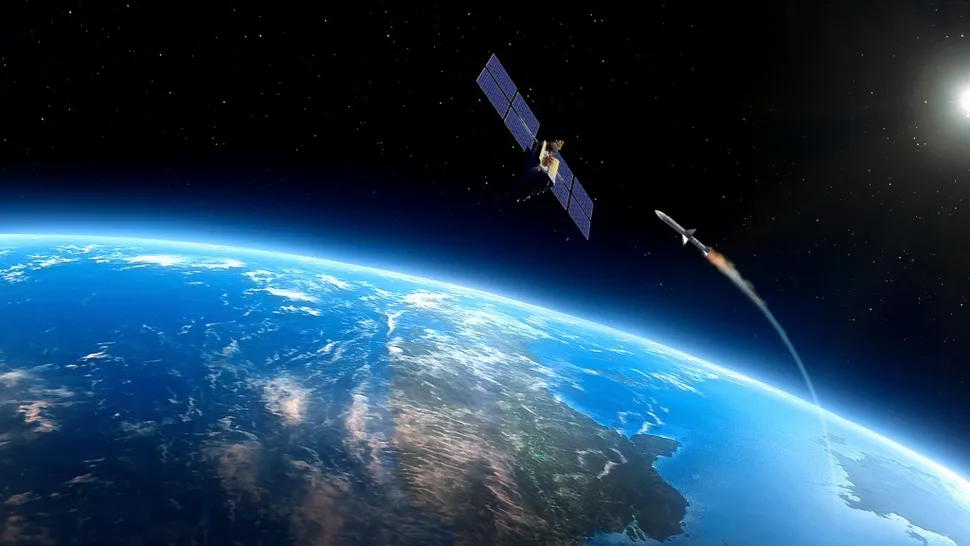
- Space-based EW: Satellites can host sensors and transmitters that extend EW reach; they also expand attack surfaces. Military planning now includes satellite-mounted electronic-attack and protection capabilities. Space-based EW complicates attribution and raises legal and escalation risks because effects can cross national boundaries instantly. Reported research and concept demonstrations indicate early operational moves in this direction.
- Commercial cellular networks: The roll-out of 5G and private cellular networks for logistics and sensors introduces new dependencies. On one hand, 5G can enable low-latency, high-bandwidth tactical networks; on the other, it creates new vectors for signal exploitation and supply-chain risk. Studies and white papers encourage careful vendor selection and layered security architectures for military use of 5G.
Both trends increase the need for joint spectrum policy between defense and civil authorities; missions that previously relied on uncontested civilian infrastructure now require redundancy and hardened alternatives.
Spectrum management for operations: practical realities
The military cannot assume global spectral freedom. Spectrum is crowded; civilians, commercial satellites, and international partners use bands that militaries need. Effective spectrum management is both a planning discipline and an operational capability.
Operational tools and concepts:
- Spectrum deconfliction: scheduling, geographic allocation, and power control to avoid fratricide and civilian interference.
- Dynamic spectrum access: tools and software to sense usable channels and avoid contested bands.
- Coalition interoperability: agreed waveforms, encryption standards, and spectrum-sharing arrangements for multinational operations.
- Regulatory engagement: working with national regulators to secure temporary allocations in crises and to protect military bands from commercial encroachment.
Commanders should obtain spectrum plans before operations and include spectrum officers in planning cells. Failure to plan for spectral effects leads to degraded comms and ISR at critical moments.
Electronic protection: hardening platforms and networks
EP is where engineering and tactics meet. Measures range from hardware to operational procedures.
Technical measures:
- Frequency hopping and spread spectrum to make narrowband jamming less effective.
- Adaptive filters and digital signal processing to reject interference.
- Directional antennas and nulling to reduce susceptibility to off-axis jammers.
- Authenticated signals and encrypted waveforms to reduce spoofing risk.
- Multi-sensor PNT: combining inertial navigation, celestial references, and eLoran where available to reduce GNSS dependence.
Operational measures:
- Emission control to reduce detectability and deny ES opportunities to the enemy.
- Redundant communication paths so a single jamming campaign cannot sever command.
- Training and drills that practice working under degraded spectrum.
Strategic example: the U.S. Army and other services have been updating EW strategies and fielding programs to institutionalize EP and EA capabilities at lower echelons, acknowledging that contested-spectrum operations are now a routine planning factor. Program announcements in 2025 show investment in multifunctional EW nodes and in brigade-level EW assets.
Countering drones and swarms with EW
Small drones brought low-cost aerial reconnaissance and strike to decentralized units; EW has proven one of the most effective counters. Options include:
- Directed RF jamming to break command-and-control links or to deny GPS for guidance.
- Spoofing to take control of off-the-shelf drones that lack secure comms.
- Kinetic options remain relevant but often require higher risk or cost.
Field trends: conflict zones show proliferation of low-cost jammer rigs and open-source techniques to defeat commercial drones. Against larger or hardened systems, military forces couple EW with air defense and radar networks to develop layered responses.
Procurement, force design and the institutional problem
EW capability gaps are not just technical; they are organizational. Two common problems appear in recent reviews:
- Acquisition mismatch: procurement cycles and large platform programs can lag behind the pace of waveform and software change.
- Organizational fragmentation: EW responsibilities are often divided among signal, intelligence, and fires communities leading to stove-piped capabilities.
Recent government and academic studies call for faster, software-enabled fielding models; they also recommend a joint approach that draws cyber, EW, and intelligence into single operational frameworks. The army-level acquisition changes and strategy updates published in 2025 reflect that direction.
Emerging technologies to watch
- Software-defined EW: Rapid reconfiguration of transmit/receive chains will let forces adapt in mission time. The surface area for cyber risk will grow as a result.
- Artificial intelligence: AI will accelerate signal classification, anomaly detection, and automated countermeasures; planners must vet AI decision loops for trust and safety in contested settings.
- Quantum-enabled sensing and communications: Early-stage work aims at quantum-resistant PNT and low-probability-of-intercept links. Practical deployment is still years away but research emphasizes the need to plan for quantum threats and opportunities.
- Space-based EW payloads: Satellite-mounted sensors and transmitters promise reach; they also raise legal and escalation risks that doctrine has yet to resolve.
Final operational guidance for planners
Treat EW as mission-critical. Include spectrum effects in every plan from the outset; do not relegate EW to a support checkbox late in planning. Invest in small, distributed EW nodes and in training that simulates contested-spectrum operations. Ensure architectures favor software upgrades so waveforms and countermeasures can evolve faster than procurement cycles.
Recent public strategies and program updates show services adopting these principles and moving investment into brigade-level and distributed EW capabilities. Adversaries remain active in both hard and soft forms of EW; expect jamming and spoofing to remain standard parts of the playbook in future conflicts.
Frequently asked questions
What is electronic warfare?
- Electronic warfare is the deliberate use and control of the electromagnetic spectrum to gain an operational advantage; it includes attacking enemy sensors, protecting friendly systems, and collecting signals for intelligence.
How does jamming differ from spoofing?
- Jamming floods or masks a receiver with unwanted energy; spoofing sends falsified signals that look valid to the receiver, causing incorrect outputs such as wrong position or time.
Can commercial 5G networks be used for military communications?
- Yes; 5G offers tactical benefits such as low latency and high bandwidth, but it also introduces supply-chain and cyber vulnerabilities that must be mitigated with security controls and careful vendor selection.
Why is cyber important to EW?
- Modern EW systems are software-heavy and networked; cyber access can change waveform behavior, corrupt sensor data, or command radio hardware remotely, so cyber and EW operations increasingly operate together.
How do forces protect GPS?
- By using anti-jam GNSS receivers, multi-sensor PNT, authenticated GNSS signals, and operational procedures that reduce GNSS reliance when possible.