FPV (first-person-view) drone technology is growing rapidly, and a 2025 defense study warns that “drone warfare is rapidly evolving and the drone threat will intensify.”
The $400 Game-Changer on the Modern Battlefield
In the skies over Ukraine, a Russian Mi-8 helicopter, a formidable piece of military hardware valued at over $10 million, was spotted on the ground. It was not a sophisticated missile or a fighter jet that sealed its fate. Instead, a small, agile aircraft, piloted remotely through a pair of goggles, streaked towards it. The aircraft was a First-Person View (FPV) drone, assembled from commercial parts for around $500. The resulting explosion reduced the multi-million dollar asset to a wreck, perfectly illustrating a profound shift in modern warfare. This single event captures the essence of a revolution unfolding on battlefields today: the rise of cheap, disposable, and lethally effective FPV drones.
Once the domain of hobbyists and competitive racers, these small unmanned aerial vehicles (UAVs) have been rapidly adapted into one of the most prevalent and impactful weapons in contemporary conflict.2 The war in Ukraine has served as a brutal, high-stakes laboratory for this technology, transforming it from a niche curiosity into an omnipresent threat. Researchers and frontline observers now agree that the majority of battlefield losses for both Russian and Ukrainian forces are caused by these machines.4 Held in one hand and piloted with an immersive headset, these devices have become a central pillar of ground combat, used to hunt infantry, destroy armored vehicles, and interdict supply lines.4
This rapid ascent marks more than just the arrival of a new weapon; it signals a fundamental democratization of airpower. For decades, the ability to deliver precision strikes from the sky was the exclusive purview of nations with billion-dollar air forces.6 The FPV drone, costing less than a smartphone, shatters that paradigm. It places a potent, guided-munition capability into the hands of small, dismounted units, creating an asymmetric advantage where a minimal investment can neutralize an opponent’s most valuable assets.7 The story of the FPV drones is the story of how accessible technology is forcing a complete rewrite of military tactics, logistics, and the very economics of war.
What Are FPV Drones and How Are They Different from Military UAVs?
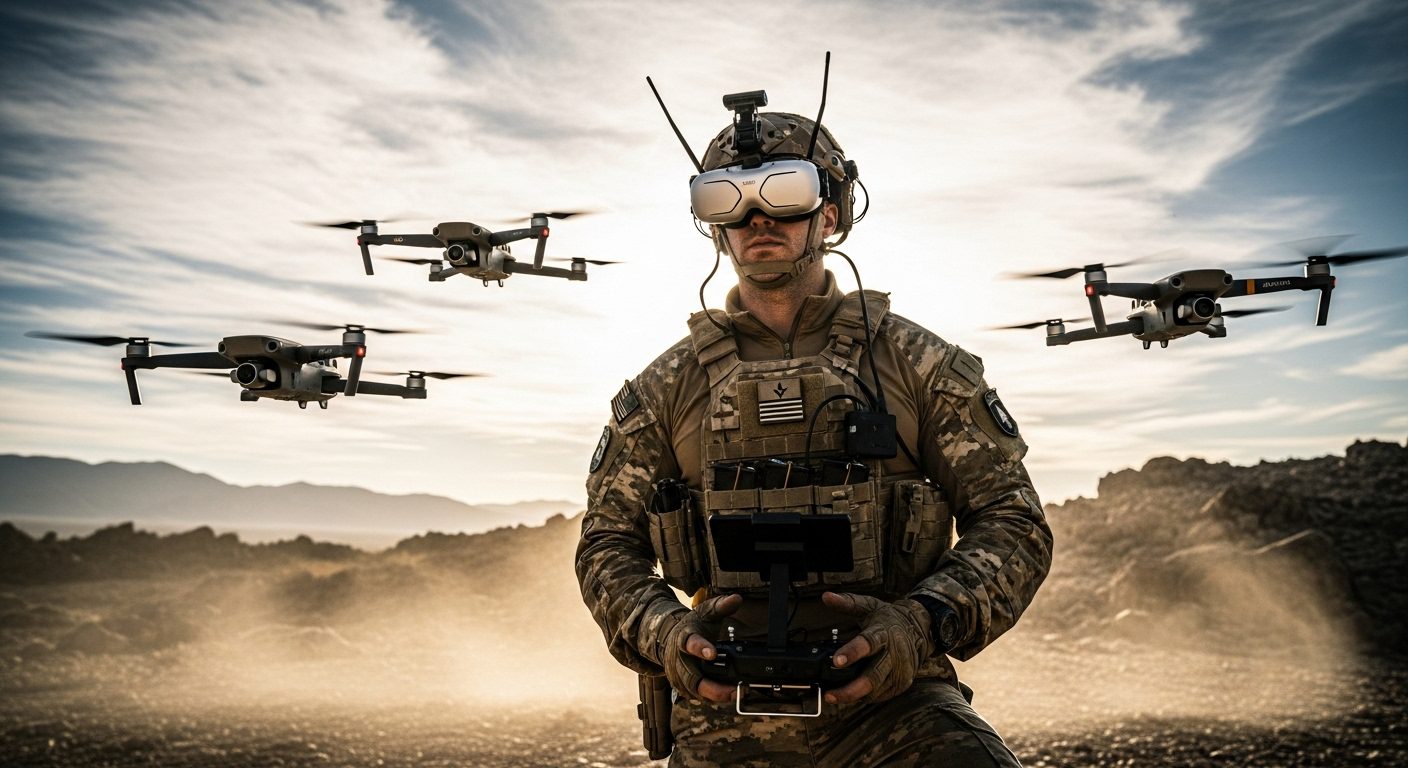
To understand the impact of FPV drones, it is essential to first grasp what makes them distinct from the larger, more conventional military drones that have dominated headlines for the past two decades. The term “FPV” stands for First-Person View. Unlike traditional drone operators who view a battlefield from a detached, top-down perspective on a screen, an FPV pilot wears goggles that stream a live video feed directly from a camera on the drone’s nose. This creates a deeply immersive experience, as if the operator is sitting in a virtual cockpit inside the aircraft itself.3 This unique perspective is the key to the FPV drone’s primary advantage: unparalleled agility and precision. Operators can navigate complex environments like forests, trenches, and urban ruins with an intuition and speed impossible for larger, less nimble UAVs.3
A typical combat FPV drone is a small quadcopter, often built with a 7- to 10-inch carbon fiber frame, and is fundamentally a stripped-down, militarized version of a racing drone.8 They are designed for speed and maneuverability, capable of reaching speeds over 120 km/h even when carrying a payload.10 Their operational range is typically limited to between 5 and 15 kilometers, constrained by radio signal strength and battery life, which often lasts only 10 to 30 minutes.2 Their destructive power comes from the munitions they carry, which are frequently improvised. Payloads can weigh up to 2.5 kg and commonly consist of anti-tank grenades like the RPG-7 warhead, mortar rounds, or other custom-made explosive charges strapped to the frame.3
The most revolutionary aspect of these platforms is their cost. Assembled from commercially available or mass-produced components, a single combat-ready FPV drone costs between $300 and $600.13 This makes them completely expendable. A commander can risk dozens of FPV drones on high-risk missions without the financial or strategic repercussions of losing a multi-million dollar traditional UAV. This economic reality underpins their tactical employment; they represent a “good enough” solution that favors quantity and saturation over the technological perfection sought in traditional military procurement. While a high-end military drone is a reusable, strategic asset, an FPV drone is a disposable, tactical munition—more akin to a smart mortar shell than an aircraft.
This distinction becomes clear when comparing them to well-known military UAVs like the Turkish Bayraktar TB2 or the American MQ-9 Reaper. These larger platforms are designed for long-endurance surveillance and precision strikes from high altitudes, operating for over 24 hours and carrying sophisticated sensors and heavy ordnance. They are invaluable strategic assets, but their cost and scarcity mean they cannot be risked in the same way as their smaller, cheaper counterparts.
| Metric | Combat FPV Drone | Bayraktar TB2 | MQ-9 Reaper |
| Unit Cost | $400 – $600 13 | ~$5 Million 15 | ~$56.5 Million (System) 16 |
| Top Speed | ~120 km/h (75 mph) 10 | ~220 km/h (137 mph) 17 | ~444 km/h (276 mph) 18 |
| Max Payload | ~2.5 kg (5.5 lbs) 10 | 150 kg (330 lbs) 17 | 1,701 kg (3,750 lbs) 19 |
| Max Range | 5 – 15 km (3 – 9 miles) 11 | >150 km (93 miles) 20 | 1,850 km (1,150 miles) 16 |
| Primary Role | Tactical Kamikaze Strike | ISR & Tactical Strike | Strategic ISR & Strike |
| Survivability | Low (Expendable) | Medium (Attritable) | High (Reusable Asset) |
This table highlights the different philosophical approaches to unmanned warfare. The Reaper and Bayraktar represent the traditional model: a few highly capable, expensive, and reusable platforms. The FPV drone represents a new model based on mass, disposability, and overwhelming volume. It is not a replacement for these larger systems but a new, complementary capability that has proven devastatingly effective in the close-quarters, attritional combat that defines modern front lines.

The New Rules of Engagement: A Deep Dive into FPV Drone Combat Tactics
The widespread adoption of FPV drones has given rise to a new and rapidly evolving tactical playbook. Far from being a simple “point-and-click” weapon, their employment involves sophisticated techniques and procedures that often integrate them with other battlefield systems. These tactics, refined in the crucible of the war in Ukraine, demonstrate a mature understanding of the drone’s strengths and weaknesses.
The Classic Kill Chain: How Reconnaissance Drones Find Targets for FPV Drone Strikes
The most common method of FPV drone employment is a two-part process that forms a highly efficient “kill chain”.10 First, a higher-altitude reconnaissance UAV, often a commercial model like a DJI Mavic, is used to identify enemy targets such as tanks, artillery pieces, or troop concentrations. This “spotter” drone loiters over the battlefield, providing a persistent overwatch. Once a target is located, its coordinates are relayed to an FPV drone team positioned several kilometers away from the front line.12 The FPV drone, armed with an appropriate munition, is then launched. Guided by its operator, it flies a low-altitude, high-speed profile directly to the target for a terminal strike. The entire engagement, from detection to destruction, is often recorded by the reconnaissance drone for battle damage assessment.10 This symbiotic relationship has dramatically shortened the targeting cycle. What once took artillery units up to 30 minutes to process can now be executed in as little as three to five minutes, providing a level of responsiveness that is critical in a dynamic fight.21
Hunting in Packs: Exploring Coordinated FPV Swarm Attacks and Combined Arms
Commanders are moving beyond single-drone strikes to coordinated mass attacks. In a tactic known as an “FPV Swarm,” a reconnaissance drone identifies a high-value target, and a group of 5 to 12 kamikaze FPV drones are launched simultaneously or in rapid succession to destroy it.10 This approach can overwhelm a target’s defenses and ensures a higher probability of a kill, especially against hardened or mobile targets. These swarm attacks are often integrated with traditional fire support; artillery or mortar fire may be used to suppress the target area, forcing personnel into shelters or pinning down vehicles, making them easier targets for the incoming drones.10 This demonstrates that FPV drones are not operating in a vacuum but are being used as a force multiplier that enhances the effectiveness of conventional arms. Similarly, they are used to escort advancing assault groups, acting as a form of on-demand, hyper-precise close air support to strike enemy strongpoints just ahead of friendly troops.10
Lurking in the Shadows: The Methodology Behind FPV Drone Ambushes and Traps
The low cost and small size of FPV drones make them ideal for ambush tactics. In an “FPV Drone Ambush,” an operator will fly a drone to a concealed position overlooking a key location—such as a road, an intersection, or a known enemy gathering point—and land it. The drone then enters a dormant “standby” mode, with only its control receiver active, conserving power.10 It can remain in this state for up to six hours, waiting for a target of opportunity to appear. When a vehicle or patrol enters the kill zone, the operator can instantly activate the drone and launch a surprise attack from point-blank range. When paired with a reconnaissance drone or a signal repeater to extend its control range, these ambushes can be set up more than 5 km from the operator.10
A more devious tactic is the “FPV Trap.” A drone is intentionally landed in an exposed area to act as bait. It may emit a sound to attract attention. When an enemy soldier approaches to capture or inspect the drone, the operator, observing through a separate reconnaissance drone, remotely detonates the explosive payload.10 These traps can be made even more sophisticated with embedded devices that trigger self-detonation if the drone’s position is altered, or a GPS beacon that reports its new location if it is moved, allowing for a follow-up strike on the enemy’s headquarters.10
Breaching Defenses and Unconventional Roles
FPV drones are also being used in specialized roles to overcome specific battlefield challenges. The “Double Impact” method is designed to defeat fortified shelters. The first drone, armed with a cumulative or shaped charge, is flown into the barrier to create a breach. A second drone, armed with a thermobaric or fragmentation warhead, immediately follows through the opening to neutralize the personnel inside.10
Beyond direct combat, their utility has expanded to include a range of unconventional missions:
- FPV-Miner: Drones are used to covertly fly in and place anti-personnel or anti-tank mines on enemy supply routes and evacuation paths, a task that would otherwise require high-risk missions by special forces or engineers.10
- Psychological Operations: Drones have been equipped with speakers to broadcast demoralizing messages over enemy positions or to drop propaganda leaflets.10
- Logistics: Larger FPV drones are used to deliver critical supplies like ammunition, medical equipment, and food to isolated frontline positions, bypassing treacherous terrain and enemy fire.12
This diverse and expanding set of tactics shows that military forces are not just using FPV drones as a crude weapon, but are developing a sophisticated and integrated doctrine around them, fundamentally changing the character of ground combat.
The Electronic Battlefield: How to Counter FPV Drones (And How They Fight Back)
The proliferation of FPV drones has ignited a frantic technological arms race. For every new drone tactic developed, a countermeasure is devised, which in turn spurs the development of a counter-countermeasure. This high-speed cycle of innovation is defining the electronic battlefield, where victory is often determined by who can adapt their technology faster.
The Wall of Static: The Role of Electronic Warfare
By far the greatest threat to a standard radio-controlled FPV drone is electronic warfare (EW).23 EW systems, often called “jammers,” work by broadcasting a powerful radio signal on the same frequencies used by the drone’s controller. This “wall of static” overwhelms the drone’s receiver, severing the link to its operator.24 Depending on its programming, a jammed drone might crash, attempt to return to its launch point, or simply fall out of the sky.25 The effectiveness of EW is substantial; by late 2024, it was estimated that jamming was successfully countering up to 70% of conventional radio-controlled FPV drones in some sectors of the front in Ukraine.26 These systems range from large, vehicle-mounted domes that provide a protective bubble over a wide area to portable “drone guns” and backpack jammers carried by individual soldiers.24
Hard-Kill vs. Soft-Kill: The Spectrum of Countermeasures
Beyond jamming (a “soft-kill” method), a wide array of “hard-kill” systems designed to physically destroy drones has emerged. These range from the simple to the highly advanced:
- Nets and Projectiles: Soldiers have resorted to using shotguns to try and down incoming drones, though this is an exceptionally difficult task against a small, fast-moving target.27 More specialized systems fire large nets from the ground or from other drones to entangle the propellers of a hostile FPV.25
- Kinetic Interceptors: Militaries are adapting existing air defense systems, such as autocannons, to engage drones. The U.S. Army has even demonstrated an aerial drone-on-drone kill, where one quadcopter detonated a claymore mine to destroy another drone in mid-air in a mission dubbed “Project Shank”.30
- Directed Energy: High-energy lasers and high-power microwave (HPM) systems represent the cutting edge of counter-drone technology.25 Lasers can burn through a drone’s airframe or destroy its sensitive optics, while HPM weapons can disable electronics, potentially neutralizing an entire swarm at once.33
However, this defensive shield has created a severe economic problem. A recent report from the Center for a New American Security (CNAS) highlights the unsustainable cost-exchange ratio of modern air defense. U.S. forces have found themselves using interceptors like a Stinger missile (costing ~$480,000) or an SM-6 missile (~$5.9 million) to shoot down adversary drones that cost as little as $20,000, or in the case of FPV drones, a mere $500.33 An adversary can achieve a strategic effect simply by forcing a superior military to deplete its limited and expensive air defense munitions on a flood of cheap, disposable threats. This dynamic is forcing a radical rethinking of air defense, pushing investment toward more cost-effective solutions.

The Fiber-Optic Revolution: A Direct Counter to Jamming
In response to the pervasive threat of EW, the next major innovation in FPV drone technology has already arrived on the battlefield: the fiber-optic tethered drone.26 These drones unspool an incredibly thin strand of fiber-optic cable as they fly, connecting them directly to the operator’s control station.10 Because the command and video signals travel through this physical cable instead of through the air, the drone is completely immune to radio frequency jamming.36 This technology not only restores the reliability of FPV strikes in heavily contested electronic environments but also provides a much clearer, higher-quality video feed than is possible over a radio link.10
This development perfectly illustrates the rapid innovation cycle at play. The proliferation of FPV drones led to the widespread deployment of jammers. The effectiveness of jammers, in turn, drove the development and deployment of fiber-optic drones. Now, forces are developing new ways to counter these tethered drones, such as mobile radar systems designed to detect them so they can be intercepted by other drones.36 This relentless, high-speed evolution, where battlefield problems are identified and technological solutions are fielded in a matter of weeks or months rather than years, is a defining feature of this new era of warfare.
Forging an Arsenal: The Global Rush to Build and Deploy FPV Drones
The tactical success of FPV drones has triggered a global scramble to produce and field them at a massive scale. This industrial challenge is testing the agility of national defense establishments and exposing critical vulnerabilities in the global supply chain. The conflict in Ukraine provides a stark case study in how a nation can build a formidable drone arsenal from the ground up, while also serving as a warning about the strategic risks of industrial dependencies.
The Ukrainian Model: From Kitchen Tables to Mass Production
At the outset of the full-scale invasion, Ukraine’s FPV drone capability was largely a grassroots effort, driven by volunteers and hobbyists assembling drones at kitchen tables and in small workshops.37 This decentralized, bottom-up approach quickly proved its worth, and the effort was rapidly formalized and scaled. By late 2023, Ukraine was operating state-owned factories and private enterprises that were producing tens of thousands of FPV drones per month.12 By early 2025, some reports claimed that Ukrainian defense companies had reached a staggering production rate of 200,000 FPV drones monthly.38 This rapid mobilization created a new type of military force, one capable of sustaining high-intensity combat through the mass deployment of low-cost, domestically produced systems.
The Dragon in the Room: A Supply Chain Built on Chinese Components
This impressive production surge, however, rests on a fragile foundation: a critical dependence on Chinese manufacturers for nearly all essential components. The global commercial drone market is dominated by China, with companies like DJI controlling an estimated 75% of the market.39 This dominance extends to the component level, with Chinese firms being the primary source for the motors, flight controllers, cameras, batteries, and video transmitters that are the building blocks of every FPV drone.2
This reliance creates a major strategic vulnerability. The Chinese government, aware of this leverage, has imposed export restrictions on certain drone technologies, complicating the supply chain for nations like Ukraine.2 The ability to throttle the supply of critical components is a powerful geopolitical tool, allowing a nation to influence a conflict without direct military involvement. This reality has triggered a global effort to diversify the supply chain and reduce dependence on China. Drone industries in places like Taiwan have seen a boom in demand from Western partners seeking non-Chinese components 42, and Ukraine itself is making a concerted effort to begin mass-producing its own motors and other parts domestically.39 The FPV drone war is thus being fought not only on the battlefield but also on the factory floor, with supply chain resilience emerging as a key factor for national security.
Western Awakening: Learning the Lessons of Modern Warfare
Observing the transformative impact of FPV drones in Ukraine, Western militaries have begun to slowly but surely adapt. The U.S. Army, which has long focused on larger, more sophisticated UAVs, is now actively working to institutionalize the lessons learned. In Germany, the 2nd Cavalry Regiment has established its own scalable, low-cost FPV drone production line, showcasing the ability to rapidly assemble and deploy large numbers of drones in a forward-deployed setting.43
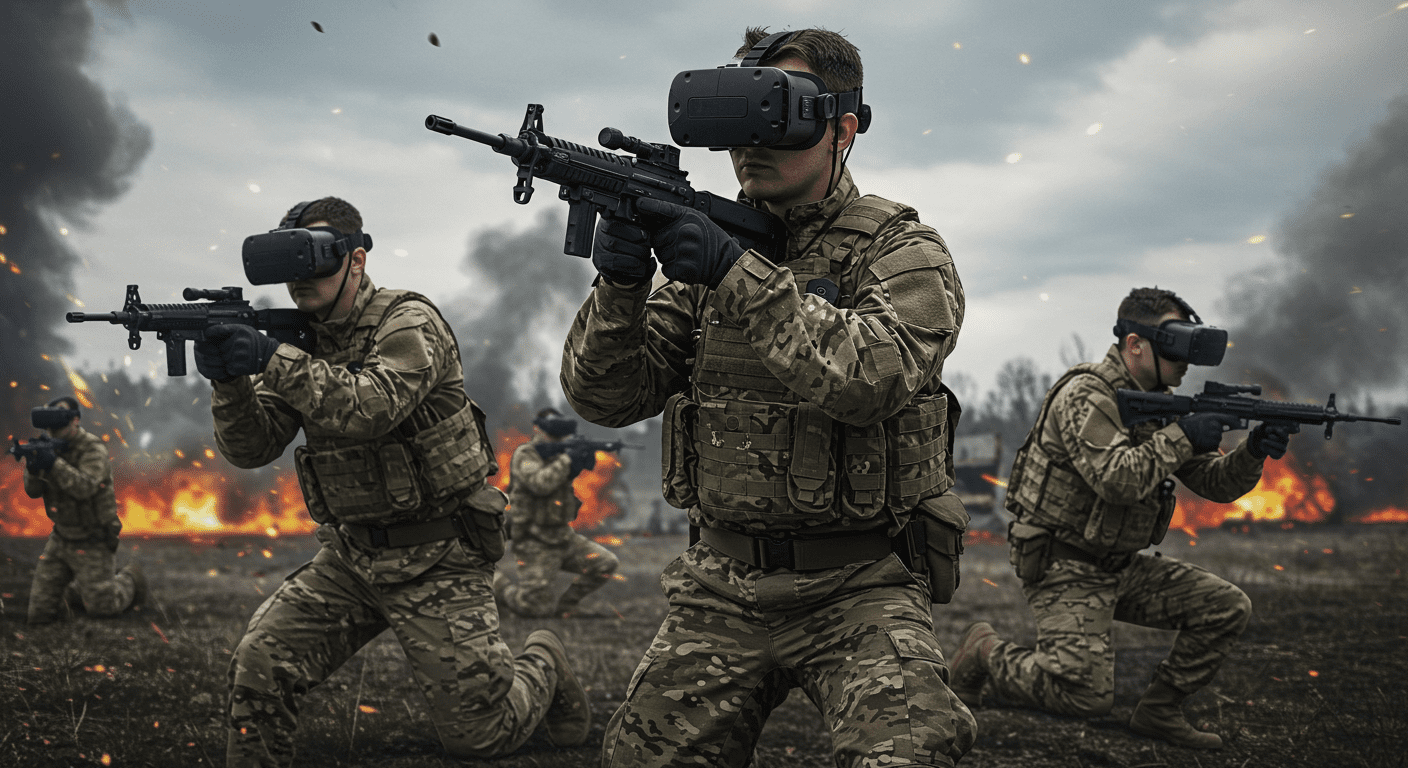
More importantly, formal training programs are being established. At Fort Rucker, Alabama, the Army has launched an “Unmanned Advanced Lethality Course” designed to create a standardized curriculum for FPV drone employment.44 This three-week course takes soldiers from various backgrounds and puts them through 20-25 hours of simulator time before they move to live flight exercises, learning not just how to fly, but how to integrate the drones with fire support and maneuver operations.46 These programs also include training on 3D printing and battlefield repair, acknowledging that a key part of this new capability is the ability to manufacture and maintain the systems at the unit level.44 Companies in the U.S. defense sector are also gearing up for mass production, with firms like Neros Technologies stating plans to deliver up to one million FPV drones per year to the Pentagon, with a supply chain that explicitly avoids Chinese components.47 This marks a significant shift, as the U.S. military begins to formally adopt the low-cost, high-volume drone warfare model pioneered on the Ukrainian plains.
The Future of Unmanned Combat: What Is the Next Evolution for FPV Drones?
The FPV drone revolution is still in its early stages. The current generation of remotely piloted kamikaze drones, while effective, represents just the first step in a rapid technological evolution. The integration of artificial intelligence, autonomous capabilities, and advanced deployment concepts promises to make these systems even more potent, further altering the landscape of the future battlefield.
The Rise of the Machines: AI-Enabled Targeting and Navigation
The next major leap for FPV drones is the integration of artificial intelligence and machine vision.2 Small, add-on modules containing a camera and a processing chip are now being fitted to FPV airframes.11 These modules enable a crucial capability: autonomous terminal guidance. An operator can use the drone to identify and “lock on” to a target, such as a tank or a vehicle. Once the lock is confirmed, the drone’s onboard AI takes over, guiding the drone to the target for the final attack run without any further input from the operator.48
This development is a direct counter-countermeasure to the threat of electronic warfare. Even if the radio link to the operator is jammed during the terminal phase of the attack, the drone can still complete its mission autonomously. This greatly increases the probability of a successful strike in a contested EW environment. Furthermore, AI will enhance navigation, allowing drones to operate effectively in areas where GPS signals are jammed or unavailable, a common feature of modern battlefields.49
Unleashing the Swarm: From Coordinated Attacks to True Swarm Intelligence
Current “swarm” attacks are more accurately described as massed, coordinated strikes, with human operators piloting each individual drone.10 The future lies in true “swarm intelligence,” a concept borrowed from nature where a collective of drones communicates and collaborates decentrally, behaving as a single, intelligent organism without a central controller.48 In such a system, a human operator would not pilot a single drone but would act as a mission commander, tasking the entire swarm with an objective, such as “find and destroy all enemy air defense systems in this grid square”.50
The individual drones within the swarm would then autonomously coordinate their actions, assigning roles, avoiding collisions, and adapting to threats in real-time.48 This would enable attacks of a complexity and speed that are impossible for humans to manage or defend against. Programs like the Pentagon’s “Replicator” initiative, which aims to field thousands of autonomous systems, are a clear indication that this is the direction in which military drone technology is headed.50 This evolution represents a fundamental shift in the role of the human on the battlefield, from a hands-on pilot to a high-level supervisor of autonomous agents.
The “Mothership” Concept: Extending the Reach of FPV Drones
One of the primary limitations of FPV drones is their short range. To overcome this, the “mothership” concept has been developed and deployed. This tactic uses a larger, longer-endurance UAV—either a fixed-wing aircraft or a heavy multirotor drone like the “Baba Yaga”—as a carrier aircraft.10 This mothership carries several smaller FPV drones as its payload. It flies deep behind enemy lines to a designated release point, where it launches the FPV drones to conduct their strikes.11
The mothership often serves a dual purpose, also acting as an airborne signal repeater, relaying the control signals between the distant operator and the FPV drones.10 This tactic dramatically extends the effective combat radius of FPVs from a mere 10-15 km to as far as 60-70 km, allowing them to strike targets in the enemy’s operational rear, such as command posts, logistics hubs, and artillery positions, that were previously safe from this type of threat.10 This concept transforms the FPV drone from a frontline tactical weapon into a tool capable of achieving operational-level effects.
Frequently Asked Questions (FAQ) About FPV Drones in Combat
How much does a combat FPV drone cost?
A typical combat FPV drone is remarkably inexpensive. The cost for a single unit generally ranges from $300 to $600. Some sources indicate that a complete setup, including the drone and basic ground components, can be assembled for around $400 to $500.13 This low cost is a primary driver of their widespread use, as they can be treated as expendable munitions.
What is the typical range and flight time of an FPV drone?
The operational range of a standard combat FPV drone is typically between 5 and 15 kilometers (about 3 to 9 miles), limited primarily by the strength of its radio control link.10 However, this range can be significantly extended through the use of signal repeaters or “mothership” drones. Flight time is also limited, usually lasting between 10 and 30 minutes, and is heavily dependent on factors like payload weight, battery size, and aggressive maneuvering.2
How are FPV drone pilots trained for military operations?
Military FPV drone pilot training is an intensive process that blends virtual and live instruction. A typical curriculum involves several weeks of theoretical learning followed by a minimum of 20-25 hours of practice on realistic flight simulators.46 Once proficient on the simulator, trainees transition to live flight exercises, starting with basic maneuvers like takeoff and landing before progressing to complex tactical scenarios, including navigating obstacle courses, coordinating with other assets, and engaging targets.57
Can FPV drones operate at night or in bad weather?
Most basic, low-cost FPV drones are primarily daytime, clear-weather systems. Their small size and light weight make them susceptible to high winds, and their standard cameras perform poorly in low light.23 However, specialized variants are increasingly being deployed for nighttime operations. These drones are equipped with thermal imaging cameras that allow them to detect targets by their heat signature, making them effective hunters in complete darkness.10
Are FPV drones replacing traditional artillery?
No, FPV drones are not replacing traditional artillery; they are complementing it and changing how it is used. Artillery remains invaluable for delivering heavy, area-effect firepower that is unaffected by electronic warfare or adverse weather.23 FPV drones, on the other hand, excel at providing highly precise strikes against specific, often moving, targets. In many cases, they are used in tandem: artillery might suppress an area, while FPV drones pick off high-value targets that emerge.10 They are two different tools that, when used together, are more effective than either one alone.
Works cited
- Ukraine’s $500 FPV Drone Takes Down Russia’s Over $10M Helicopter – Kyiv Post, accessed September 29, 2025, https://www.kyivpost.com/post/61060
- FPV Drones and Military Use | Drone Industry Insights 2025, accessed September 29, 2025, https://droneii.com/military-fpv-drones
- FPV Drones in Modern Warfare – Embleholics, accessed September 29, 2025, https://embleholics.com/fpv-drones-in-modern-warfare/
- How FPV drones are transforming Ukraine’s battlefield – YouTube, accessed September 29, 2025, https://www.youtube.com/watch?v=pCDSl0Yb2jM
- “Ukrainian FPV Drone Catches Russian Fighter Off Guard—Too Late to Run!” – YouTube, accessed September 29, 2025, https://www.youtube.com/watch?v=0nIOPIoPsYQ
- Drones vs. Traditional Air Power: A Cost-Effective Alternative? – insideFPV, accessed September 29, 2025, https://insidefpv.com/blogs/blogs/drones-vs-traditional-air-power-a-cost-effective-alternative
- FPV Drones: The Future Of Asymmetric Warfare | Madras Courier, accessed September 29, 2025, https://madrascourier.com/opinion/fpv-drones-the-future-of-asymmetric-warfare/
- What drones are being used in Ukraine? – Reddit, accessed September 29, 2025, https://www.reddit.com/r/drones/comments/1ex2tik/what_drones_are_being_used_in_ukraine/
- FPV drones – ГО Справа громад, accessed September 29, 2025, https://spgr.org.ua/en/portfolio-items/fpv-drones/
- FPV Drone Tactics & Countermeasures | Endoacustica, accessed September 29, 2025, https://www.endoacustica.com/fpv-drone-tactics.php
- The Russia-Ukraine Drone War: Innovation on the Frontlines and Beyond – CSIS, accessed September 29, 2025, https://www.csis.org/analysis/russia-ukraine-drone-war-innovation-frontlines-and-beyond
- FPV Drone Ukraine: Use and Types – Dignitas Fund, accessed September 29, 2025, https://dignitas.fund/blog/fpv-drone-ukraine/
- What Ukraine’s drones really cost – Defence Blog, accessed September 29, 2025, https://defence-blog.com/what-ukraines-drones-really-cost/
- FPV – Defense Tech for Ukraine, accessed September 29, 2025, https://defensetechforukraine.org/fpv/
- TB2 Bayraktar: Big Strategy for a Little Drone – Ifri, accessed September 29, 2025, https://www.ifri.org/sites/default/files/migrated_files/documents/atoms/files/peria-peigne_tb2_bayraktar_2023.pdf
- MQ-9 Reaper > Air Force > Fact Sheet Display – AF.mil, accessed September 29, 2025, https://www.af.mil/About-Us/Fact-Sheets/Display/Article/104470/mq-9-reaper/
- Bayraktar TB2 – BAYKAR Technology, accessed September 29, 2025, https://baykartech.com/en/uav/bayraktar-tb2/
- MQ-9A Reaper (Predator B) | General Atomics Aeronautical Systems Inc., accessed September 29, 2025, https://www.ga-asi.com/remotely-piloted-aircraft/mq-9a
- MQ-9 Reaper Fact Sheet > Creech Air Force Base > Display, accessed September 29, 2025, https://www.creech.af.mil/About-Us/Fact-Sheets/Display/Article/669890/mq-9-reaper-fact-sheet/
- bayraktar – tb2uas – Baykar, accessed September 29, 2025, https://cdn.baykartech.com/media/upload/userFormUpload/sy7JH9hB9upCek920ObOU7SOc2ihH9gr.pdf
- How are Drones Changing Modern Warfare? | Australian Army Research Centre (AARC), accessed September 29, 2025, https://researchcentre.army.gov.au/library/land-power-forum/how-are-drones-changing-modern-warfare
- www.endoacustica.com, accessed September 29, 2025, https://www.endoacustica.com/fpv-drone-tactics.php#:~:text=This%20tactic%20involves%20using%20FPV,with%20precision%20and%20minimal%20detection.
- Article: “I Fought in Ukraine and Here’s Why FPV Drones Kind of S*ck” – Reddit, accessed September 29, 2025, https://www.reddit.com/r/CredibleDefense/comments/1ll7ypj/article_i_fought_in_ukraine_and_heres_why_fpv/
- A shield against FPV drones: is Ukraine’s electronic warfare capability matching drone advancements? | Ukrainska Pravda, accessed September 29, 2025, https://www.pravda.com.ua/eng/articles/2025/08/8/7525279/
- 10 Types of Counter-drone Technology to Detect and Stop Drones Today – Robin Radar, accessed September 29, 2025, https://www.robinradar.com/resources/10-counter-drone-technologies-to-detect-and-stop-drones-today
- Countering small drones: A big challenge – European Security & Defence, accessed September 29, 2025, https://euro-sd.com/2025/09/articles/exclusive/46573/countering-small-drones-a-big-challenge/
- How to survive fpv drones, guide from a Russian veteran. : r/tacticalgear – Reddit, accessed September 29, 2025, https://www.reddit.com/r/tacticalgear/comments/1aol8jn/how_to_survive_fpv_drones_guide_from_a_russian/
- FPV Drone Defense | Shotguns, Cover & Concealment – YouTube, accessed September 29, 2025, https://www.youtube.com/watch?v=H8DRPMEhkfg
- How To Protect Yourself From Enemy/Russian FPVs? New Ukrainian Anti-Drone Weapons, accessed September 29, 2025, https://www.youtube.com/watch?v=8F7HJd57xV0
- Army marks first aerial drone-on-drone kill as new lethal UAS course gets underway, accessed September 29, 2025, https://www.sandboxx.us/news/army-marks-first-aerial-drone-on-drone-kill-as-new-lethal-uas-course-gets-underway/
- Against the Drones: How to Stop Weaponized Consumer Drones – Defense One, accessed September 29, 2025, https://www.defenseone.com/feature/against-the-drones/
- anti-drone laser system. Destroys FPV drone from 1500m : r/TankPorn – Reddit, accessed September 29, 2025, https://www.reddit.com/r/TankPorn/comments/1j7vyek/antidrone_laser_system_destroys_fpv_drone_from/
- CNAS Report Calls for Urgent Investment in Counter-Drone Defenses, accessed September 29, 2025, https://insideunmannedsystems.com/cnas-report-calls-for-urgent-investment-in-counter-drone-defenses/
- CNAS Report Finds U.S. Military Unprepared for Drone Threat, accessed September 29, 2025, https://www.cnas.org/press/press-release/cnas-report-finds-u-s-military-unprepared-for-drone-threat
- US must develop counter drone defenses fast: CNAS – Taipei Times, accessed September 29, 2025, https://www.taipeitimes.com/News/taiwan/archives/2025/09/12/2003843669
- A New and More Deadly Drone on Russia’s Battlefields – CEPA, accessed September 29, 2025, https://cepa.org/article/a-new-and-more-deadly-drone-on-russias-battlefields/
- Drones Are Key to Winning Wars Now. The U.S. Makes Hardly Any. A four-day test in the Alaska wilderness shows how far the U.S. military and American drone companies lag behind China in the technology. : r/LessCredibleDefence – Reddit, accessed September 29, 2025, https://www.reddit.com/r/LessCredibleDefence/comments/1lyp0zk/drones_are_key_to_winning_wars_now_the_us_makes/
- Drone superpower: Ukrainian wartime innovation offers lessons for NATO – Atlantic Council, accessed September 29, 2025, https://www.atlanticcouncil.org/blogs/ukrainealert/drone-superpower-ukrainian-wartime-innovation-offers-lessons-for-nato/
- ‘Little by little away from China’ — Inside Ukraine’s new mass-production of drone parts, accessed September 29, 2025, https://kyivindependent.com/little-by-little-away-from-china-ukraines-new-mass-production-of-drone-parts/
- Drone Spare Parts & Accessories Suppliers | Global Sourcing Solutions – Accio, accessed September 29, 2025, https://www.accio.com/supplier/suppliers-of-drone-spare-parts-and-accessories
- Drone Supply Chain Disrupted: Western Shift Itensifies, accessed September 29, 2025, https://droneii.com/global-drone-supply-chain-disrupted-crisis-opportunity
- Demand for Non-Chinese Supply Chain Ignites Taiwan Drone Boom, accessed September 29, 2025, https://english.cw.com.tw/article/article.action?id=4342-Demand%20for%20Non-Chinese%20Supply%20Chain%20Ignites%20Taiwan%20Drone%20Boom
- U.S. Army displays FPV drone production in Germany – Defence Blog, accessed September 29, 2025, https://defence-blog.com/u-s-army-displays-fpv-drone-production-in-germany/
- Army plays ‘catch up’ on drone warfare with new operator course – Task & Purpose, accessed September 29, 2025, https://taskandpurpose.com/news/army-drone-course-fort-rucker/
- Fort Rucker launches its first-ever advanced drone training course – Army Times, accessed September 29, 2025, https://www.armytimes.com/news/your-army/2025/08/19/fort-rucker-launches-its-first-ever-advanced-drone-training-course/
- U.S. Army Aviation Center of Excellence Launches Unmanned Advanced Lethality Course to Equip Soldiers for Future Warfare | Article, accessed September 29, 2025, https://www.army.mil/article/287907/u_s_army_aviation_center_of_excellence_launches_unmanned_advanced_lethality_course_to_equip_soldiers_for_future_warfare
- FPV Drone Manufacturer Plans to Deliver 1 Million Drones a Year to U.S. Military – Militarnyi, accessed September 29, 2025, https://militarnyi.com/en/news/fpv-drone-manufacturer-plans-to-deliver-1-million-drones-a-year-to-u-s-military/
- The Rise of Drone Swarms: the Future of Warfare – VGI-9, accessed September 29, 2025, https://vgi.com.ua/en/the-rise-of-drone-swarms-the-future-of-warfare/
- First Person View Drones, accessed September 29, 2025, https://www.ecssr.ae/en/research-products/reports/2/198140
- Drone Wars: Developments in Drone Swarm Technology – Defense Security Monitor, accessed September 29, 2025, https://dsm.forecastinternational.com/2025/01/21/drone-wars-developments-in-drone-swarm-technology/
- Military Drone Swarm Intelligence Explained – Sentient Digital, Inc., accessed September 29, 2025, https://sdi.ai/blog/military-drone-swarm-intelligence-explained/
- Baba Yaga (aircraft) – Wikipedia, accessed September 29, 2025, https://en.wikipedia.org/wiki/Baba_Yaga_(aircraft)
- Ukrainian Drone Swarms Controlled by ‘Baba Yaga’ Robot Aircraft, Russian Sources Claim – Kyiv Post, accessed September 29, 2025, https://www.kyivpost.com/post/28771
- www.war.gov, accessed September 29, 2025, https://www.war.gov/News/News-Stories/Article/Article/4264091/hawkeye-platoon-leads-army-innovation-with-tactical-drones-3d-printed-lethality/
- How Far Can a Drone Fly? Maximum Ranges and Legal Limits …, accessed September 29, 2025, https://www.jouav.com/blog/how-far-can-a-drone-fly.html
- dzygaspaw.com, accessed September 29, 2025, https://dzygaspaw.com/drone-school-digital-sky#:~:text=FPV%20%E2%80%94%20course%20for%20piloting%20impact,flight%2C%20hovering%2C%20and%20landing.
- Military Drone Training | Pendleton UAS Range | Tactical Drone Operations, accessed September 29, 2025, https://www.pendletonuasrange.com/military-drone-training
- FPV Drone Training | Military Tactical Operations – T1G, accessed September 29, 2025, https://t1g.com/drone-training/fpv-uas-operator/
- Punishment inflicted on enemy will be greater than before, says Western Army commander Lt Gen Katiyar on drone warfare, accessed September 29, 2025, https://indianexpress.com/article/cities/chandigarh/manoj-kumar-katiyar-on-drone-warfare-10278086/
- Drone warfare – Wikipedia, accessed September 29, 2025, https://en.wikipedia.org/wiki/Drone_warfare
- HOW TO TRANSFORM THE ARMY FOR DRONE WARFARE – War Room, accessed September 29, 2025, https://warroom.armywarcollege.edu/articles/transform-for-drones/
- Are FPV drones doctrinally considered part of artillery warfare (and therefore their structure, organization, tactics, training etc within militaries)? Or are they an extension of the capabilities of armor/infantry units? Or is the jury still out? : r/WarCollege – Reddit, accessed September 29, 2025, https://www.reddit.com/r/WarCollege/comments/1ixkfxj/are_fpv_drones_doctrinally_considered_part_of/
- I Built a $40,000 Military Drone for $120.07 – YouTube, accessed September 29, 2025, https://www.youtube.com/watch?v=bmLE9BT76Pc
- U.S. Marines conduct a Kinetic FPV Drone Range to develop Strike Ops – YouTube, accessed September 29, 2025, https://www.youtube.com/watch?v=H3qHmCSAOH0
- Unmanned combat aerial vehicle – Wikipedia, accessed September 29, 2025, https://en.wikipedia.org/wiki/Unmanned_combat_aerial_vehicle
- Ultra-long-range FPV drone idea – Reddit, accessed September 29, 2025, https://www.reddit.com/r/fpv/comments/1e4qkrz/ultralongrange_fpv_drone_idea/
- Russian Drone Innovations are Likely Achieving Effects of Battlefield Air Interdiction in Ukraine | Institute for the Study of War, accessed September 29, 2025, https://understandingwar.org/research/russia-ukraine/russian-drone-innovations-are-likely-achieving-effects-of-battlefield-air-interdiction-in-ukraine/
- How fiber optic drones reshape warfare in Ukraine – YouTube, accessed September 29, 2025, https://www.youtube.com/watch?v=NwkOxXgAWZ0
- How would you use drones in war? : r/fpv – Reddit, accessed September 29, 2025, https://www.reddit.com/r/fpv/comments/1257623/how_would_you_use_drones_in_war/
- The Battlefield Evolution: Latest FPV Drones in Modern Warfare – MSS Defence, accessed September 29, 2025, https://mssdefence.com/blog/the-battlefield-evolution-latest-fpv-drones-in-modern-warfare/
- Tactical FPV Defense Training | Unmanned Systems | Special Operations – YouTube, accessed September 29, 2025, https://www.youtube.com/watch?v=dwRngNzexvM
- 2023 Guide to 150+ FPV & Drone Acronyms – Sharpen your FPV Skills! – YouTube, accessed September 29, 2025, https://www.youtube.com/watch?v=nrAF59nPLvw
- The Rise of Tiny FPV Drones in Warfare: How They’re Used – Dronelife, accessed September 29, 2025, https://dronelife.com/2024/05/31/the-rise-of-tiny-fpv-drones-in-warfare-how-theyre-used/
- Military drones for ISTAR – Height technologies, accessed September 29, 2025, https://heighttechnologies.com/military-istar-drones/
- A 2024 Guide to the Different Types of Drones & UAS – Everglades University, accessed September 29, 2025, https://www.evergladesuniversity.edu/blog/guide-different-types-drones-unmanned-aerial-systems/
- Become a Certificated Remote Pilot | Federal Aviation Administration, accessed September 29, 2025, https://www.faa.gov/uas/commercial_operators/become_a_drone_pilot
- Remotely Piloted Aircraft (RPA) Pilot – Air Force, accessed September 29, 2025, https://www.airforce.com/careers/aviation-and-flight/pilot/remotely-piloted-aircraft-pilot
- Want to train for military drone operator role – best civilian options for skill-building? – Reddit, accessed September 29, 2025, https://www.reddit.com/r/drones/comments/1mpanff/want_to_train_for_military_drone_operator_role/
- Small Drones, Big Limits: A Smarter Drone Strategy | Small Wars Journal by Arizona State University, accessed September 29, 2025, https://smallwarsjournal.com/2025/09/22/small-drones-big-limits-a-smarter-drone-strategy/
- Russia’s Changes in the Conduct of War Based on Lessons from Ukraine, accessed September 29, 2025, https://www.armyupress.army.mil/Journals/Military-Review/English-Edition-Archives/September-October-2025/Lessons-from-Ukraine/
- How a $2K AI‑Guided Drone Crippled Russia’s Military Production Factory – YouTube, accessed September 29, 2025, https://www.youtube.com/watch?v=paW_o0P2rSA
- Drone busting: Smart devices work together to knock out UAS threats | Article – U.S. Army, accessed September 29, 2025, https://www.army.mil/article/288720/drone_busting_smart_devices_work_together_to_knock_out_uas_threats
- AFB Counter FPV Drone Defenses : r/LessCredibleDefence – Reddit, accessed September 29, 2025, https://www.reddit.com/r/LessCredibleDefence/comments/1g4ccsq/afb_counter_fpv_drone_defenses/
- Drone, Counterdrone, Counter-Counterdrone: Winning the Unmanned Platform Innovation Cycle – Modern War Institute, accessed September 29, 2025, https://mwi.westpoint.edu/drone-counterdrone-counter-counterdrone-winning-the-unmanned-platform-innovation-cycle/
- Swarm Technology in Sustainment Operations | Article | The United States Army, accessed September 29, 2025, https://www.army.mil/article/282467/swarm_technology_in_sustainment_operations
- Swarm Clouds on the Horizon? Exploring the Future of Drone Swarm Proliferation – Modern War Institute, accessed September 29, 2025, https://mwi.westpoint.edu/swarm-clouds-on-the-horizon-exploring-the-future-of-drone-swarm-proliferation/
- FPV Drone Swarms in Asymmetric Warfare: Tactical Innovations and Ethical Challenges, accessed September 29, 2025, https://www.sciencepublishinggroup.com/article/10.11648/j.advances.20250603.12
- FPV drones in Ukraine are changing modern warfare – Atlantic Council, accessed September 29, 2025, https://www.atlanticcouncil.org/blogs/ukrainealert/fpv-drones-in-ukraine-are-changing-modern-warfare/
- MQ-9 Reaper Armed Unmanned Aircraft System (UAS) – Director Operational Test and Evaluation, accessed September 29, 2025, https://www.dote.osd.mil/Portals/97/pub/reports/FY2017/af/2017mq9reaperuas.pdf?ver=2019-08-19-113931-413
- mq-9 reaper/predator b – General Atomics Aeronautical Systems, accessed September 29, 2025, https://www.ga-asi.com/air-force/img/downloads/Predator_B_MQ-9_Reaper_datasheet.pdf
- Reaper (MQ-9A) – Royal Air Force, accessed September 29, 2025, https://www.raf.mod.uk/aircraft/reaper-mq9a/
- Baykar Bayraktar TB2 UAV – Automated Decision Research, accessed September 29, 2025, https://automatedresearch.org/weapon/baykar-bayraktar-tb2-uav/
- Baykar Bayraktar TB2 – Wikipedia, accessed September 29, 2025, https://en.wikipedia.org/wiki/Bayraktar_TB2
- Bayraktar TB2 Turkish Unmanned Aerial Vehicle (UAV) – ODIN – OE Data Integration Network, accessed September 29, 2025, https://odin.tradoc.army.mil/WEG/Asset/d7fb07088a4e0dcdb61092ebd3003d5d
- Recent conflicts like Ukraine have shown the effectiveness of consumer-level drones in combat. Has there been any notable developments in the defense industry towards more purpose-made personal drones? : r/WarCollege – Reddit, accessed September 29, 2025, https://www.reddit.com/r/WarCollege/comments/1n5z7tj/recent_conflicts_like_ukraine_have_shown_the/
- Ukrainian Unmanned Aerial System Tactics | T2COM G2 Operational Environment Enterprise, accessed September 29, 2025, https://oe.tradoc.army.mil/product/ukrainian-unmanned-aerial-system-tactics/
- Lessons from Ukraine: How Counter-Drone Systems Could Have Changed the Battlefield, accessed September 29, 2025, https://www.skylock1.com/securing-the-skies-why-counter-drone-systems-are-vital-for-todays-battlefields-and-borders/
- Military Drone School – Dzyga’s Paw, accessed September 29, 2025, https://dzygaspaw.com/drone-school-digital-sky
- DJI Digital FPV System – Specifications, accessed September 29, 2025, https://www.dji.com/fpv/specs
- High Speed FPV Drone | movr FAF DL1 | stage 2 | 400kmh – YouTube, accessed September 29, 2025, https://www.youtube.com/watch?v=o1j6GRsKM78
- SkyStars G4 Long Range 4″ ARF Drone Kit w/ GPS – 4S – GetFPV, accessed September 29, 2025, https://www.getfpv.com/skystars-g4lr-4-long-range-arf-drone-kit-w-gps-4s.html
- High Speed Drone | movr FAF stage 1 (DL1) | LOS – YouTube, accessed September 29, 2025, https://www.youtube.com/watch?v=1GoATnPgS_A
- FPV Racing Drones – Makerfire, accessed September 29, 2025, https://shop.makerfire.com/collections/fpv-racing-drones
- Worlds Fastest 4S Drone? | High Speed FPV Drone | movr FAF DL1 | stage 2.1 | 300kmh, accessed September 29, 2025, https://www.youtube.com/watch?v=ytvb1_yNuVc
- Molniya: Russia’s wooden flatpack drone that’s being copied by Ukraine – YouTube, accessed September 29, 2025, https://www.youtube.com/watch?v=Gsp2ZzgyDa0
- War & Sanctions: What makes russian FPV drone Molniya and Orlans’ analog Phoenix fly, accessed September 29, 2025, https://gur.gov.ua/en/content/war-sanctions-zavdiaky-chomu-litaiut-rosiiski-fpv-kryla-molnyia-ta-analoh-orlanu-fenyks
- Ukraine’s ‘Dreaded’ Baba Yaga Bomber Drone Now Has A Russian Analog! Here’s How It Betters One-Way Kamikaze Drones – EurAsian Times, accessed September 29, 2025, https://www.eurasiantimes.com/ukraines-dreaded-baba-yaga-bomber-drone/
- BABA YAGA Hunts Putin’s Air Defenses AFTER DARK – Russian Troops Defenseless!, accessed September 29, 2025, https://www.youtube.com/watch?v=FEh3_jznj48
- Forbes: Russia promises soldiers 10-day leave for capturing Ukrainian “Baba Yaga” drones it can’t build – Euromaidan Press, accessed September 29, 2025, https://euromaidanpress.com/2025/01/18/forbes-russia-promises-soldiers-10-day-leave-for-capturing-ukrainian-baba-yaga-drones-it-cant-build/
- Ukraine’s “Baba Yaga” Drones Now Appear Capable Of Launching Guided Munitions, accessed September 29, 2025, https://www.twz.com/air/ukraines-baba-yaga-drones-now-appear-capable-of-launching-guided-munitions
- SEQURE Bkli10 FPV Long Distance Racing Drone 10 inch Long Endurance, accessed September 29, 2025, https://sequremall.com/products/sequre-bkli10-fpv-long-distance-racing-10-inch-3kg-load
- GEPRC Crocodile Baby 4 HD Long Range FPV(New F722 AIO), accessed September 29, 2025, https://geprc.com/product/geprc-crocodile-baby-4-hd-micro-long-range/
- My craziest long (range) flight – Drone FPV La Gomera – YouTube, accessed September 29, 2025, https://www.youtube.com/watch?v=4QzigK0dbnQ
- Unbelievable: Up to 30min Flight Time & 4KM Range on Your 5” FPV Drone! – YouTube, accessed September 29, 2025, https://m.youtube.com/watch?v=EFjTRLx3lY8
- Far Away : A Long Range FPV Short By FalconRad – YouTube, accessed September 29, 2025, https://www.youtube.com/watch?v=dOZRjsUT_6k
- We Accidentally Disturbed the Chupacabra with our FPV Drone! – YouTube, accessed September 29, 2025, https://www.youtube.com/watch?v=w0_Dm57fynU
- Drones vs. Electronic Warfare: Who’s Winning the Battle for the Skies in Ukraine? – VGI-9, accessed September 29, 2025, https://vgi.com.ua/en/drones-vs-electronic-warfare-whos-winning-the-battle-for-the-skies-in-ukraine/
- Countering the Swarm – CNAS, accessed September 29, 2025, https://www.cnas.org/publications/reports/countering-the-swarm
- Sharper: Defending Against Drones – CNAS, accessed September 29, 2025, https://www.cnas.org/publications/commentary/sharper-drones
- Countering the Swarm: America’s Drone Deterrence Strategy | CNAS, accessed September 29, 2025, https://www.cnas.org/publications/podcast/countering-the-swarm-americas-drone-deterrence-strategy
- (PDF) Nation’s Defense: A Comprehensive Review of Anti-Drone Systems and Strategies, accessed September 29, 2025, https://www.researchgate.net/publication/389805965_Nation’s_Defense_A_Comprehensive_Review_of_Anti-Drone_Systems_and_Strategies
- A Few Suggestions to Improve Anti-drone Measures for Combating Against the Drone Menace, accessed September 29, 2025, https://tssm.edu.in/storage/Menus/NAAC/2024/Criteria3/3.3.1/Publ_2024_029.pdf
- NAVAL POSTGRADUATE SCHOOL THESIS – DTIC, accessed September 29, 2025, https://apps.dtic.mil/sti/pdfs/AD1114696.pdf
- Embracing Drone Diversity: Five Challenges to Western Military Adaptation in Drone Warfare – King’s College London, accessed September 29, 2025, https://www.kcl.ac.uk/warstudies/assets/paper-29-dr-dominika-kunertova.pdf